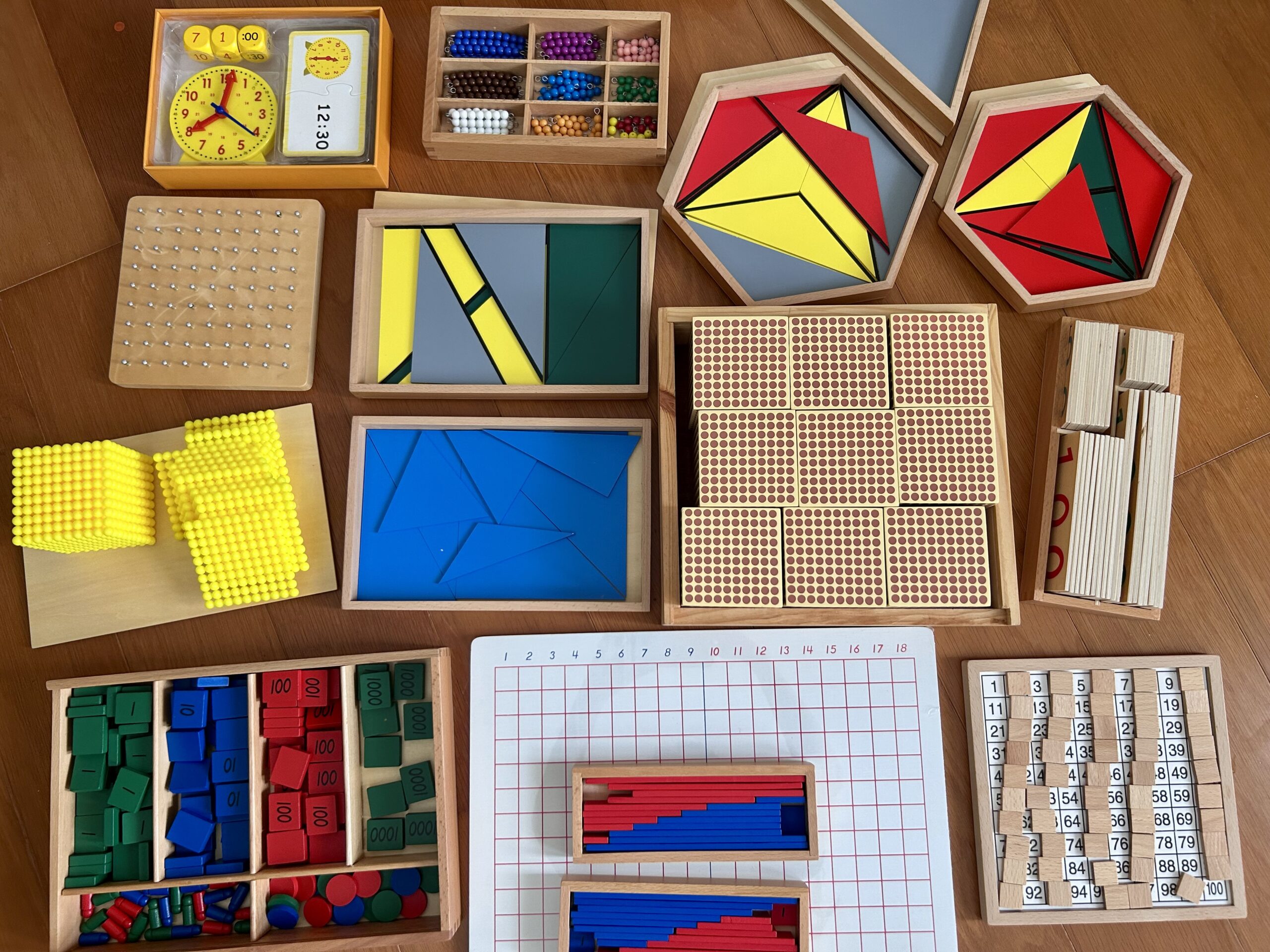
Why We Teach Math with Real Objects Before Numbers on Paper
One of the things I appreciate most about our homeschool journey is that it has changed the way I think about math.
Growing up, math often meant worksheets, memorizing procedures, and trying to arrive at the correct answer as quickly as possible. It worked for some people, but for many children, numbers remain abstract symbols that don’t seem to mean anything.
I learned from Maria Montessori that math should be taught concretely before abstractly.
Before expecting my son to understand that 7 + 5 = 12, I want him to see seven objects, count five more, combine them with his own hands, and discover that there are twelve altogether.
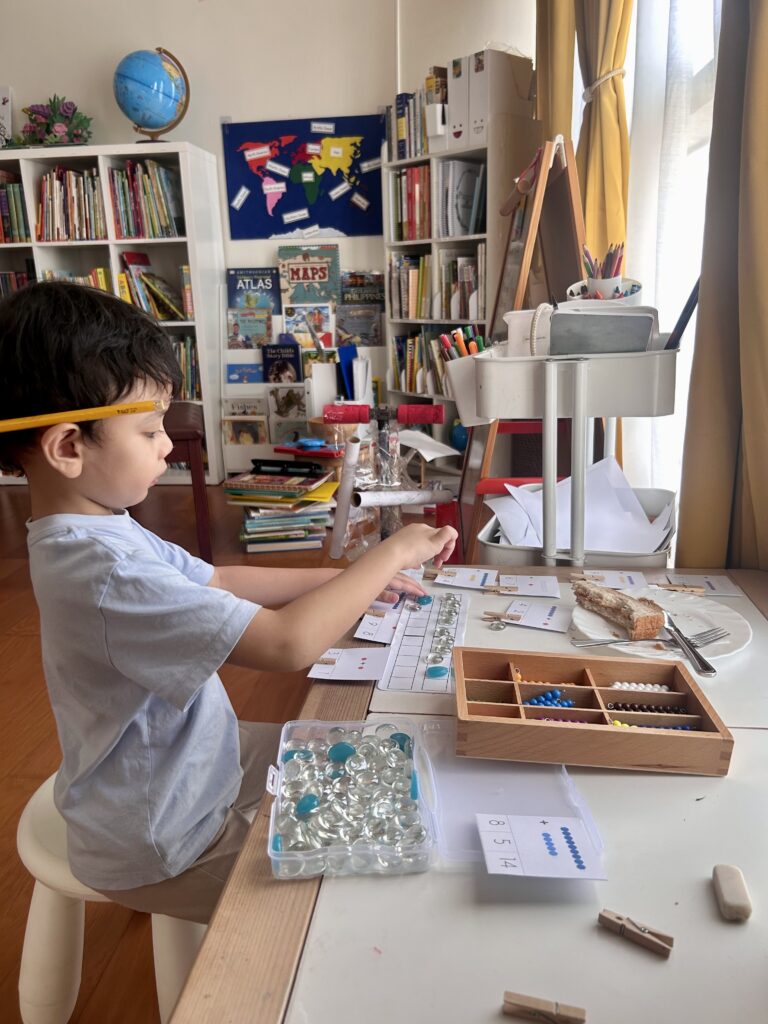
When children can touch, move, group, compare, and rearrange objects, numbers begin to represent something real. The symbols on paper stop being mysterious because they already understand the idea behind them.
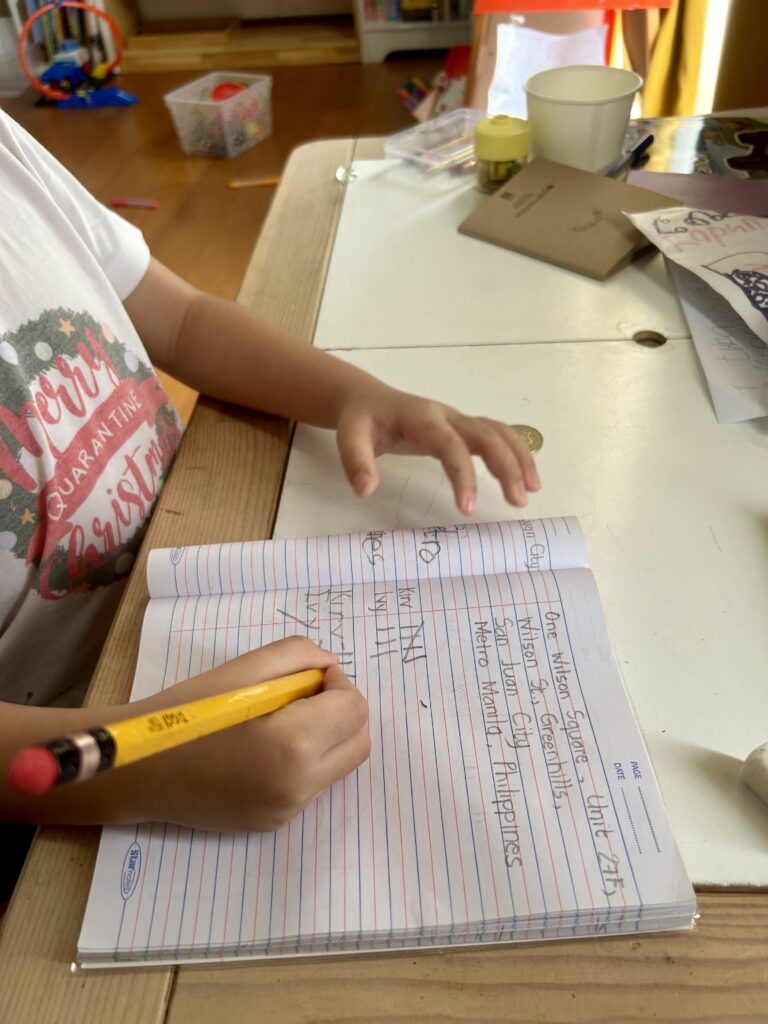
My son is in Grade 1, and he still doesn’t have a dedicated math notebook. We use the Math with Confidence workbook for written exercises and do more mental math or exercises using manipulatives.
Why Concrete Learning Matters
Children naturally learn through their senses. Before they understand symbols, they understand experiences.
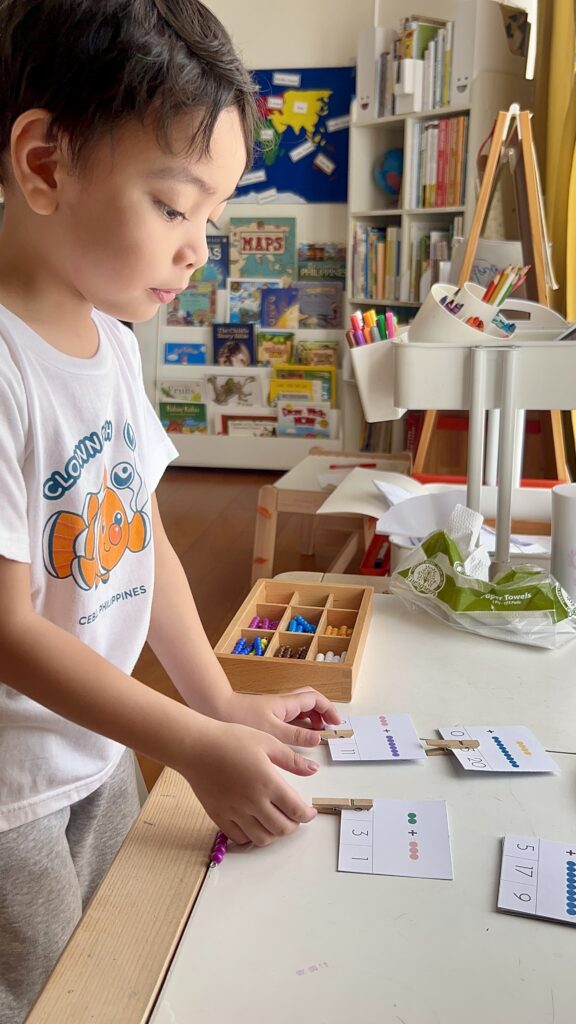
They know what “more” looks like when one pile is bigger than another. They understand “taking away” when they physically remove objects. They discover patterns by arranging shapes. They learn place value by building tens and ones instead of simply hearing someone explain it.
These experiences become the foundation for abstract thinking later on. When we skip this step and move too quickly to worksheets, children often memorize procedures without fully understanding why they work. For example, memorizing the multiplication table.
When math is too abstract too early, that’s when confidence drops. But when children understand it with their hands first, the numbers start to make sense.
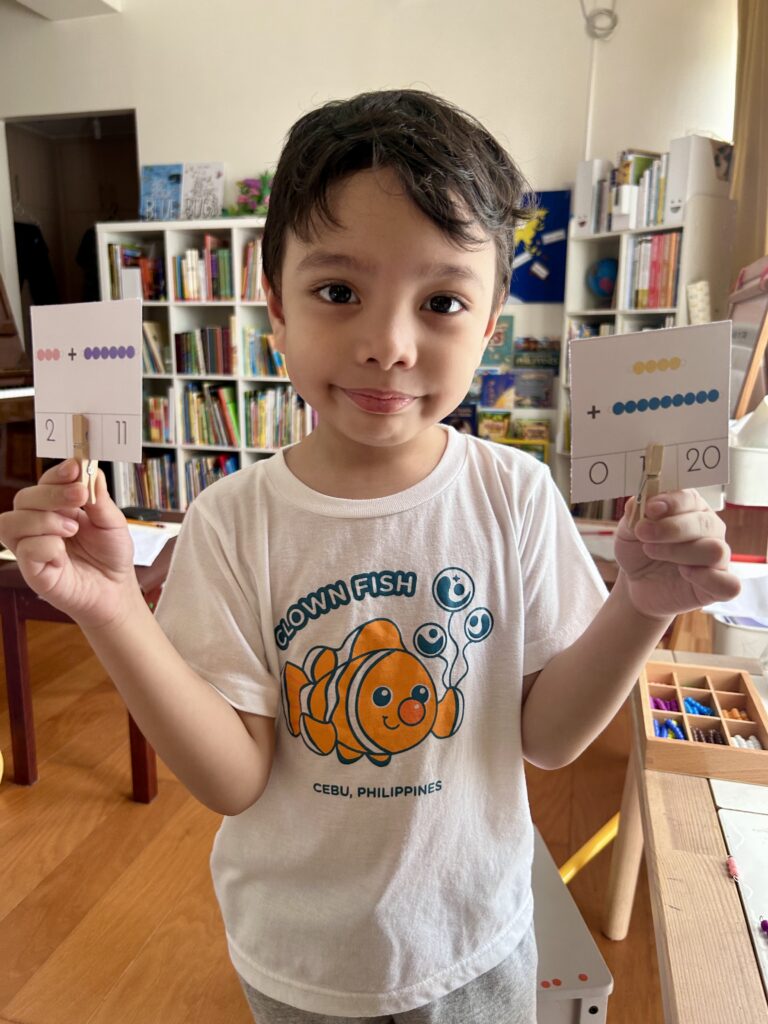
This has been his favorite activity in kinder.
You Don’t Need Expensive Manipulatives
One concern I often hear is that hands-on math requires buying lots of manipulatives.
I understand why it feels that way. Open any instagram and you’ll find shelves of beautiful math materials.
But honestly, most of ours are incredibly simple. I had bought expensive ones because Montessori materials unfortunately cost a lot these days. But everything could be simplified or DIY-ed if you really want to.
We would use stones collected outdoors as counters if we had a backyard or park nearby.
Craft sticks or chopsticks from to go orders became tally marks.
Bottle caps, buttons, toy cars, animals, or even mung beans can all become math manipulatives.
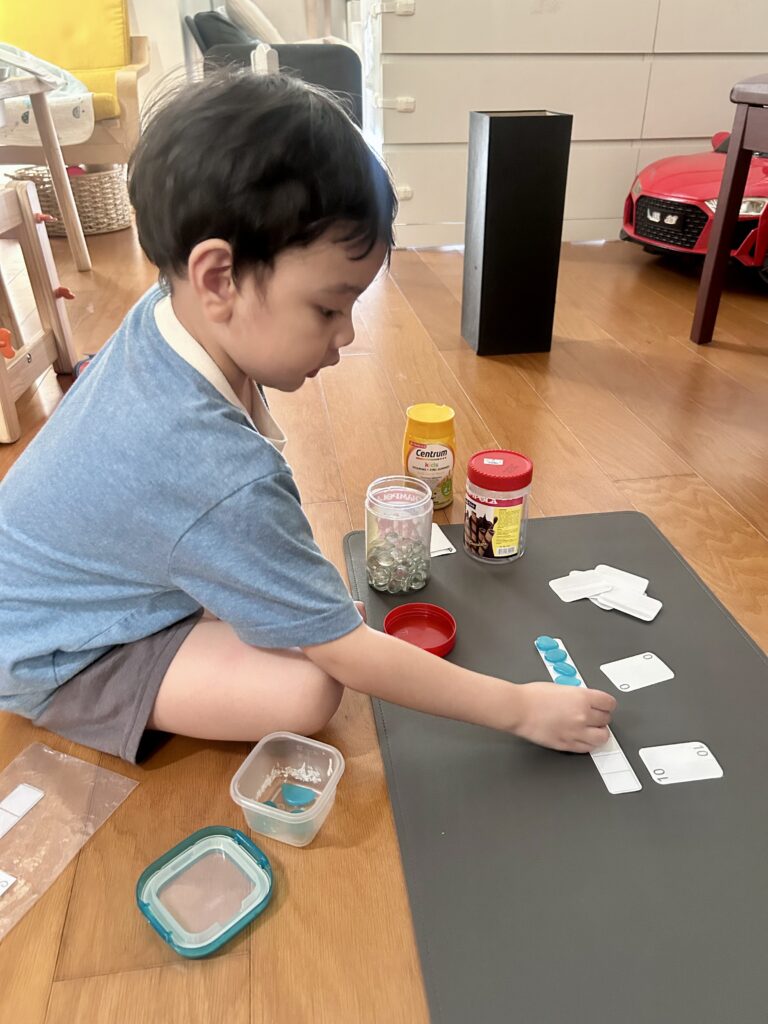
Our math journey
Math Manipulatives We Actually Use
(and Why We Love Them)
I have separate posts below about how we did math, but also discussed here the math tools that help bring numbers to life.
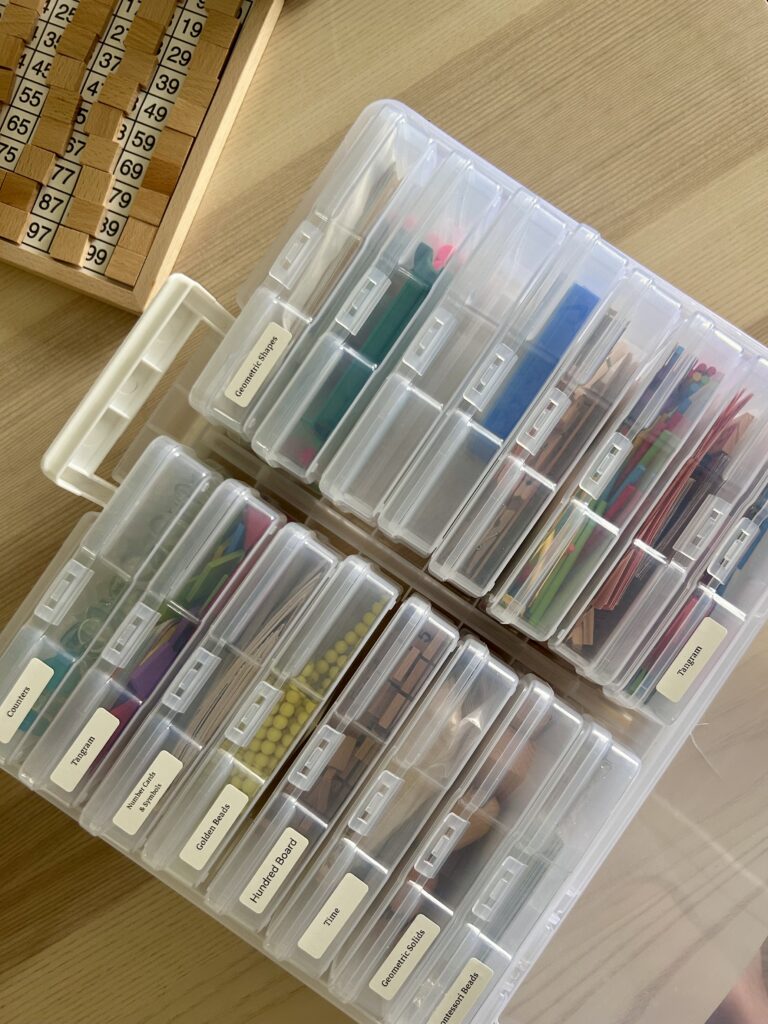
What’s Inside Our Homeschool Math Box?
A tour of the manipulatives we actually use, how we organize them, and when we bring them out during lessons.
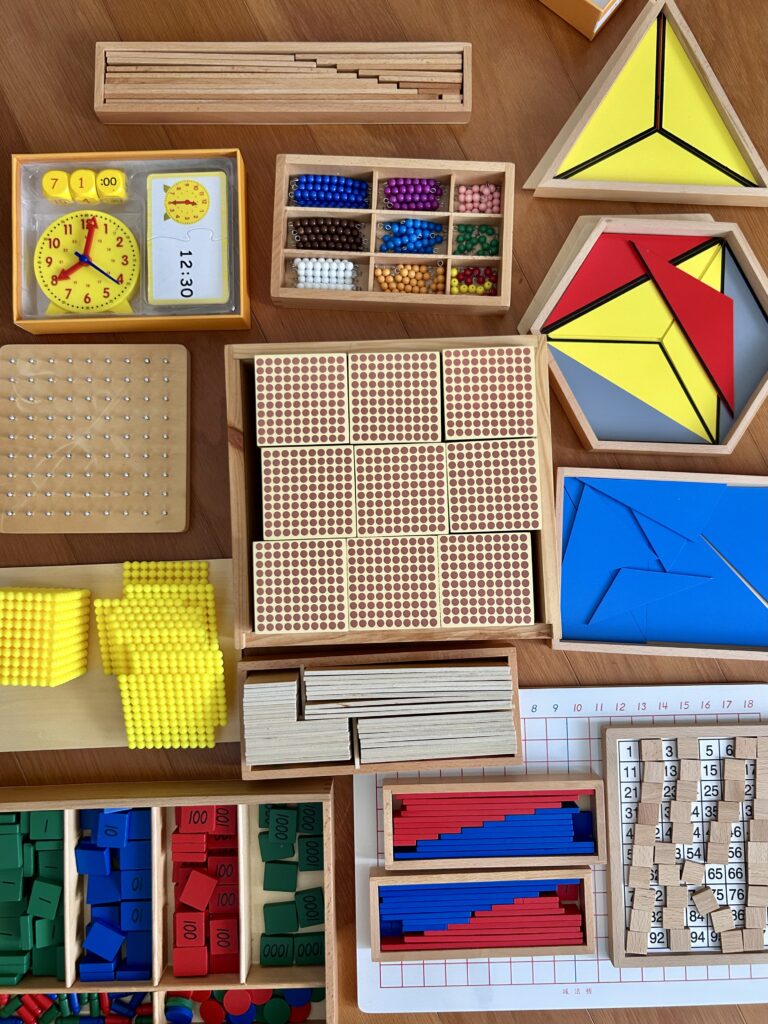
Our Montessori-ish Math Journey
The materials we’ve used over the years, the scope and sequence we loosely followed, and how we incorporated Montessori philosophy into our math curriculum.
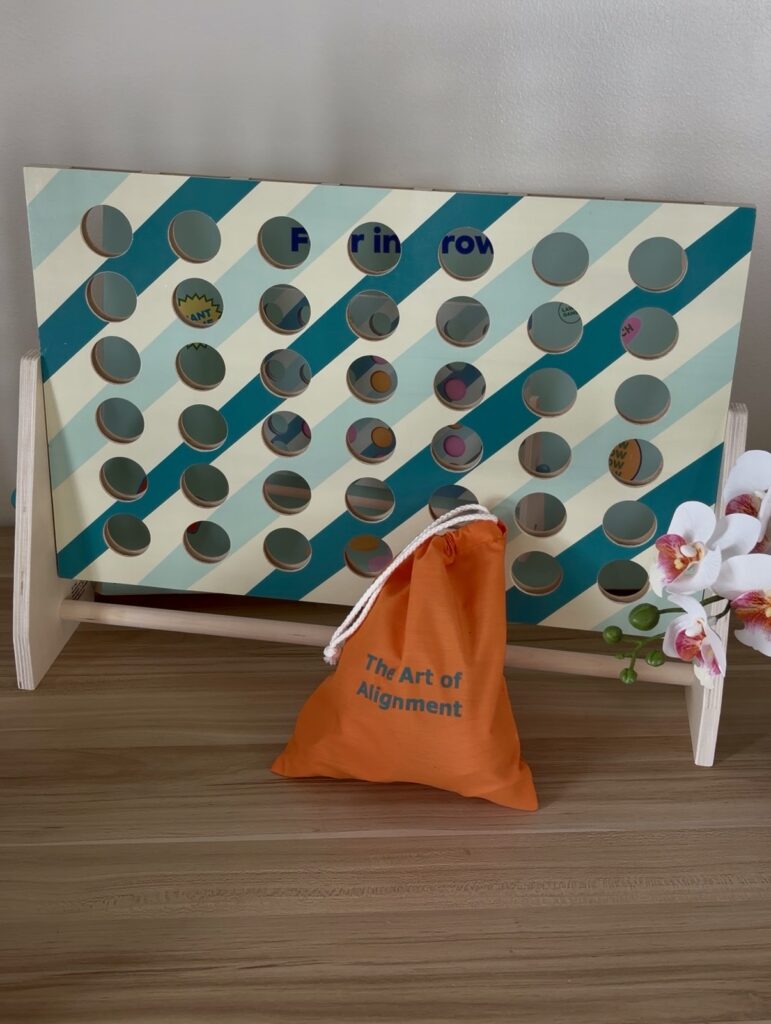
Math Games We’ve Loved Through the Years
The board games, card games, and simple activities that helped reinforce math concepts while making learning enjoyable.
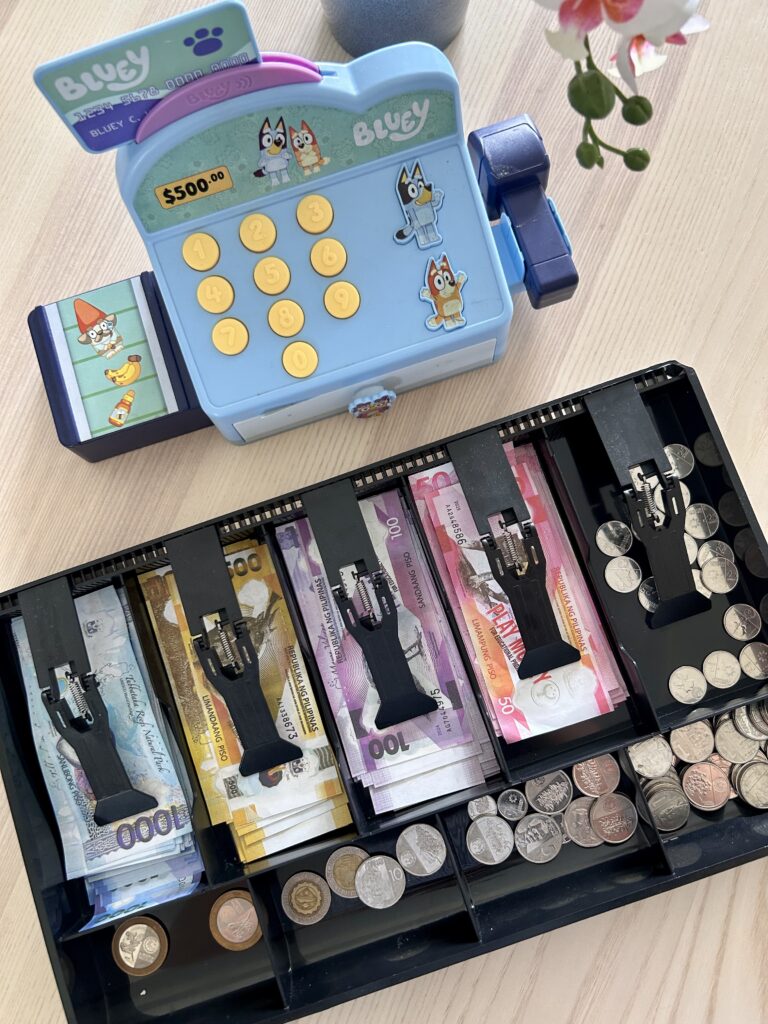
Learning About Money with Real Coins and Play Money Bills
Practical ways we teach money concepts that help children understand counting money, making change, and the value of currency.

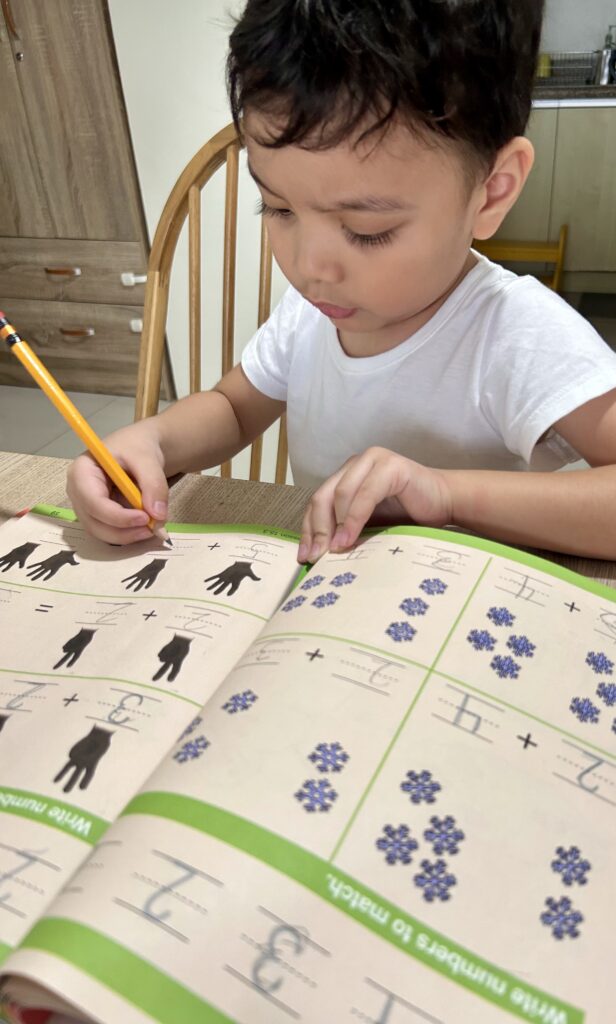
Eventually, children will move beyond manipulatives. They won’t always need stones to solve addition problems or beads to understand place value. But by then, the abstract symbols already have meaning.
And once a child has crossed that bridge, they can confidently work with numbers because they understand what those numbers represent.
That’s the kind of confidence I hope to build with my child. Not the confidence that comes from memorizing answers, but the confidence that comes from truly understanding how math works. 🙏🏻

One Comment