Do You Need to Choose a Homeschool Philosophy First?
In my opinion, no.
Straight answer. I don’t think you need to have it all figured out before you begin.
When people first look into homeschooling, it’s easy to feel overwhelmed by all the different philosophies—Charlotte Mason, Montessori, Waldorf, Classical, Unit Studies, and many more. It can feel like you have to choose one before you even start homeschooling.
Let me share my experience.
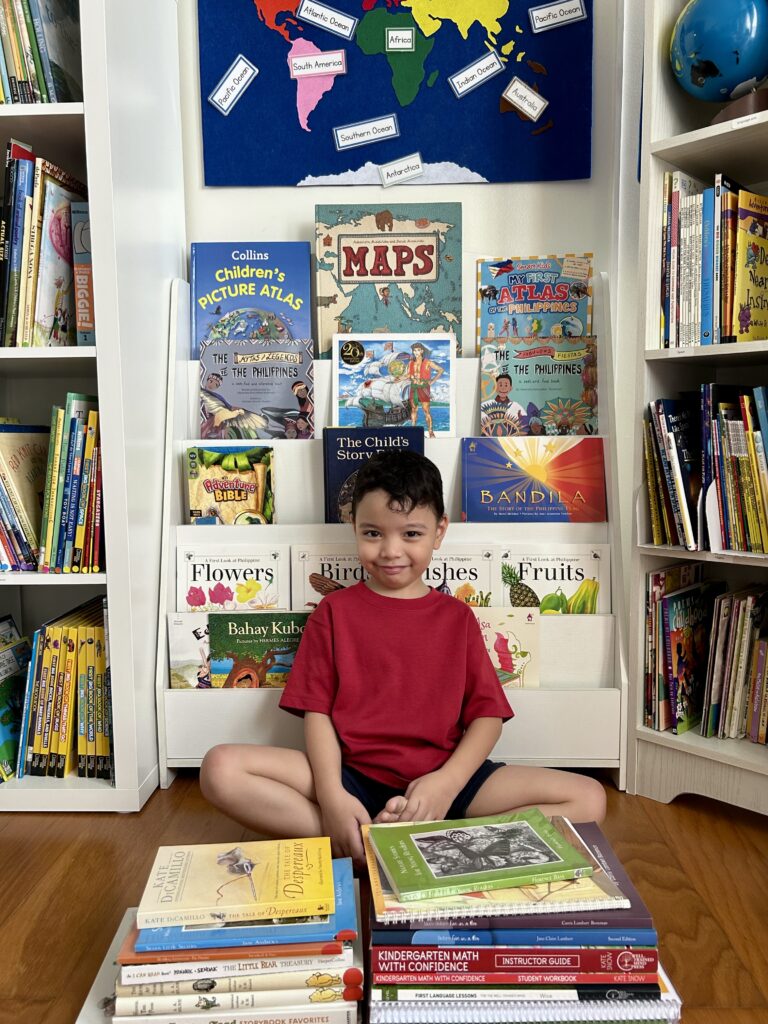
When my son was two, our homeschool was simply play-based. We spent our days reading, playing, talking, and exploring together.
Because play-based learning naturally uses hands-on materials, I started learning more about them. That’s when I discovered my first dear friend, Maria Montessori (*wink*). I dove deeper and began incorporating Montessori principles into practical life, language arts, math, music, and science. We even became intentional about choosing books that reflected those values.
As my son’s love for books grew, I eventually met my best friend, Charlotte Mason. Today, we’re enrolled in a Charlotte Mason homeschool provider, and many of its principles have become part of our daily rhythm.
But I’m not a 100% Charlotte Mason purist. (So please don’t get mad at me, Maria, you know you’re still my dear friend!)
Kidding aside, instead of worrying about which philosophy I belonged to, I simply focused on learning how my child learned best. I made an effort to educate myself, stayed curious, and remained open to learning from different approaches.
Until now, I have been continuously “accidentally” learning about other philosophies. One example is grammar. Traditionally, Charlotte Mason introduces formal grammar at a later age. My son, however, began reading at three years old. Based on where he was developmentally, I felt he was ready for gentle grammar instruction. So I chose materials influenced by the neo-classical approach for that subject.
And that’s okay. I don’t feel the need to fit every part of our homeschool into a single philosophy. Different educational approaches have different strengths, and I’m grateful that homeschooling gives us the freedom to thoughtfully choose what serves our child best.
Your homeschool doesn’t have to fit neatly into one box. It just has to work for your family.
My advice is simple: don’t let the pressure to follow the “perfect” philosophy keep you stuck in the planning and teaching phase. Do not think about whether this curriculum you have is not Charlotte Mason enough if it is working great for your family.
Just learn as you go. Observe your child. Read widely (books are much better than these internet posts and reels). And, of course… be willing to adjust.


One Comment